Episode Transcript
[00:00:03] Speaker A: Welcome to AINA Insights where prominent leaders and influencers shaping the industrial and industrial technology sector discuss topics that are critical for executives, boards and investors. INA Insights is brought to you by INA AI, a firm focused on working with industrial companies to make them unrivaled segment of ONE leaders. To learn more about INA AI, please visit our website at www.aina.AI.
[00:00:40] Speaker B: Hey everyone.
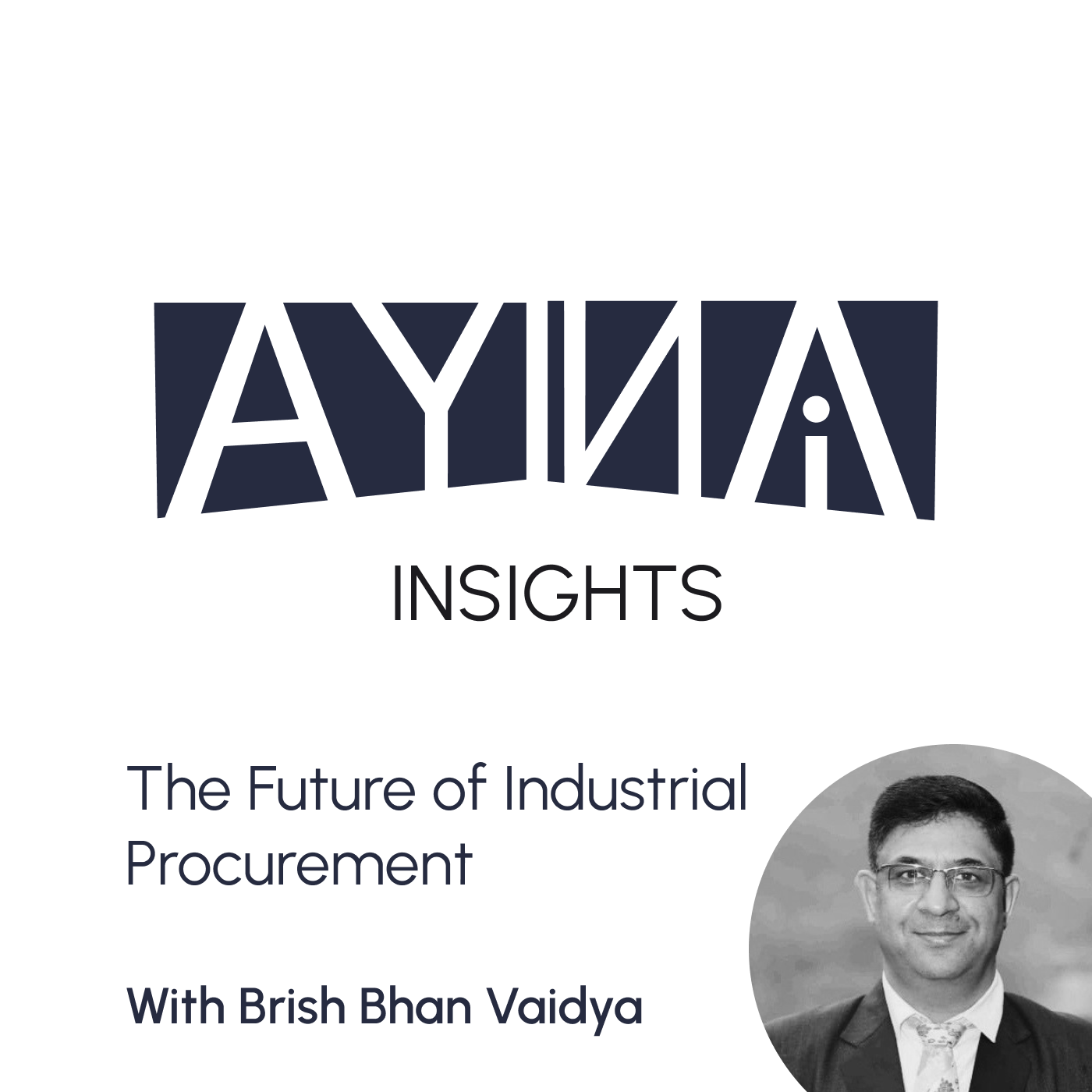
Welcome to another episode of our Titanium Economy podcast series hosted by aina. Today we're joined by Rish Bhan Vaidya, who's a global procurement executive with over 20 years of experience leading strategic sourcing, procure to pay, contract, lifecycle management and other business transformations. Brish currently leads APAC strategic Sourcing and the Global Buying center at Uber where he drives sourcing strategies, supplier partnerships and cost optimizations across the entire region. He has also held senior leadership roles at bt, at Accenture, American Express, amongst others where he's built world class sourcing capabilities and has driven operational excellence. We are very pleased to have Rish here with us, Brish. Pleasure to have you with us speaking and, you know, sharing your experience here today.
[00:01:31] Speaker C: Thanks a lot, Vivek, for hosting me.
[00:01:33] Speaker B: Yes, Brish, you know, I would like to begin with, you know, procurement in today's environment.
Procurement has moved from being just a cost center to a strategic lever. So how do you see its role evolving in today's disruptive environment, especially with the current disruptions with tariffs and other geopolitical events that are happening around us, right?
[00:01:57] Speaker C: Fair question, Vivek. So I know procurement has gone through a lot of transformation in last 30 to 40 years. And especially if we talk about the last five years, the pace of change has been very, very different wherein it has moved from a cost center to a value add function. So that's the first thing which I'm sure every single sourcing and procurement leader accepts. Even the organizations are accepting that it is not just, you know, the procurement of goods that this function does. They kind of, you know, drive a lot of value, they kind of create agility in the system and they are the one who actually understand, you know, the resilience in the process also. And lot of I would say, you know, appreciation, I would say goes to, you know, the leaders who kind of, you know, showed all the resistance, resilience in last, you know, five years after, you know, the COVID when it hit the world and after that everyone started looking at, you know, how does the supply chain react to it. Companies were looking at, you know, this function that make sure that you go and still buy you know, for us, get, you know, the material.
And that's where I think the trust on this function went up.
We talk about some of the recent, you know, developments that have happened. And you mentioned about tariff. So see, tariff I would say would stay unless, you know, someone comes and remove it, you know, fully.
But yes, the organizations have started reacting to it. There have been disruptions due to tariff also. There have been supply shops also and there have been, you know, challenges in running the organization. But again, I would say the sourcing organization, they are actually looking at their supply base. They know where they need to get, you know, the material or services from. So they are working on multiple supplier strategies. Definitely some companies are ahead, some professionals are ahead on this, who actually could foresee the impact of tariff that might come in their organization or in their supply chain. And that's the where they started looking at, you know, the supply ecosystems also not just their own organization. Okay, who's my supplier? Where does my supplier actually get, you know, the material or services from? Is there an impact there? So that's where the, you know, professionals started looking at it and they could solve it to some extent. Has this been solved by everyone in all the cases? Answer is no, because, you know, the impact is still being felt, strategies are still being built by some of, you know, the organizations. And one thing I would say is because of, you know, the lot of data availability and the AI tools, definitely, you know, the professionals are generating more intelligence, finding more ways. The access to information definitely has become easier and better. So that's where they are trying to kind of figure out, okay, what steps have been taken by other professionals or companies or functions in the globe, you know, and they're trying to deploy those. So that's what I would say from cost savings to a strategic business enabler, that's where the shift has already happened for, you know, the procurement organization.
For some organization, it was still a back office function till, I would say, a couple of years back. But yeah, there has been a change there also.
[00:05:06] Speaker B: Yeah, I mean, that's very interesting. Especially, you know, the last few years.
I think procurement and supply chain really became mainstream with COVID Right. Like when people started running out of here in the US when people started running out of toilet paper and paper towels, that's when it came to the fore. And I think, you know, in, in a way it has really given the well deserved spotlight on the procurement professionals. So, you know, that was a silver lining that came out of all these, you know, terrible kind of events. So, and one thing that you touched on is very, very, you know, relevant is that don't only need to see your first degree supplier, right. For one degree away, like where are their suppliers, who's. And then their supplier like all the way downstream. Right. Because you might not be impacted directly by tariffs, but indirectly you might be. So as you said, right, like if, I guess once, if you're smart enough to look all the way down the value chain, I think that's where the people really differentiate, organizations can differentiate. So that's very interesting take. Thank you.
So continuing that forward. Right.
So you touched on it a little bit. But what are the biggest sourcing and supplier risks that you see companies facing in 2025 and beyond and how should leaders respond? Right.
[00:06:27] Speaker C: So there are a couple of concepts that have come up in last few years have become more relevant. For example, if you pick up ESG as one of agenda.
So this has come down in, you know, the, I would say whole organization. In most organization it's a top down approach but it has come to, you know, the sourcing agenda also that they need to ensure that whatever procurement they are doing there is a degree of ESG in that. And when we talk about ESG, again, I'm not talking about the sustainability alone here, talking about E S and G separately, wherein people are reviewing their processes, you know, they are collecting scores on sustainability, how much carbon, you know, footprint they have. So they are looking at that. But what is happening at supplier and also in a few countries, I would say a lot of insolvency is also happening. Right. For multiple reasons. Right. So that is also risk that is coming on, you know, the supply base as well as, you know how the geopolitical fragmentation is happening for last, I would say a couple of years, especially this year, things are definitely changing. And these are all the risks that, you know, the sourcing professionals are actually sitting on now. How, how they are resolving or how they should resolve multiple things. Right. So one dependency on one supplier that has to be reduced. Right. You need to have a multi tire supplier approach being, you know, part of your agenda.
Maybe minimum two suppliers max would be three or four depending upon, you know, where all you are manufacturing or where you need the services. Right. So move from local to global and have that right balance. That is something which is very important. But along with that, do understand the supply chain beyond your tier one supplier also so that you can understand where the risk lies and where you need to still work on this. Second, I would say there has to a balanced, you know, risk appetite which Organization need to do, which is again, similar to diversifying from geography, diversifying from the existing supplier base and look at a broader one. Then build the whole ecosystem about the supplier wherein you actually measure their performance from time to time, keep a watch on them, follow the supplier risk matrices, also collect data from, I would say the AI engines, do the predictive analysis. Okay. What are the trigger points when I need to go out in the market or when is it that I can see disruption and I might need to order more? So those are some of the things that organizations need to do. I would say in a summary, more than reactive, it has to be a proactive, you know, scenario planning that, you know, the professionals need to do.
[00:09:07] Speaker B: Yeah, absolutely. And I think, you know, one of the things, I was at this not genpact, Gartner, Gartner conference a few years ago, and even there, you know, there was a lot of stress on the proactive planning and all the tools that are available. So that, that definitely seems to be top of mind across the entire supply chain. Yeah.
So now shifting lanes a little bit, let's talk a bit about, you know, strategy and resilience. Right. So the tariffs, they seem to be here to stay. Right. Like, we don't know how long they are here, but they're not immediately going away and they are not cyclical. Right. Like, typically, supply chain constraints, bottlenecks have had some sort of a rhythm. But right now it looks like there's no structure, there's no cyclicity to it. So with all of that, how should sourcing leaders rethink the supplier footprint and the supplier concentration risk? Right. You touched upon diversification. Right. Like not have a single point of failure. But if you can just elaborate more on that.
[00:10:19] Speaker C: Sure. So I think first thing that professions in the sourcing and procurement need to understand, you know, well, the tariff concept in today's term just came, you know, four or five months ago.
So it is not a headwind. Right. So I think this is now setting the new baseline.
Covid was one baseline. Okay. Things can go wrong. Tariff is the other baseline, wherein you have to start thinking things might get disrupted in your supply chain. Right. So that's the new baseline diversification definitely need to be done. Now that can be your local diversification, it could be regional diversification, or it could be your global diversification. Wherever you are running your offices, wherever you are running your factories, wherever you are kind of, you know, producing something, you need to ensure that that particular facility does not get, you know, disrupted.
Right. So you need to build a Base of supplier to cater to each and every individual site.
You have to move from that agenda. That consolidation of supplier base will drive the cost savings. No, you have to first look at the continuity of the business, then, you know, looking at the cost savings. So that is one fundamental shift that need to happen in the mind of sourcing organizations or you know, the sourcing professionals. In fact, that's happening, right? So where we spoke about this function is a value add function. So this is where the organizations are also seeing that professionals are now talking about running the business then just saving the cost or you know, just driving the compliance. So that's the first thing I spoke about. Deals, supplier sourcing and multi supplier sourcing. You know, those should become part of your everyday strategy, right? So when you're doing your annual exercise that how much spend you will be managing, what is it that you need to give back to the business? Make sure that there is a supplier strategy. Also there is at a category level, at a commodity level, at a country level, everything has to be kind of, you know, done there. And the concept of, you know, the total cost of ownership or you know, the total landed cost, that has to be kind of, you know, considered because if you are getting a supply at the lowest cost, but there is a supply disruption, the total cost of ownership will go up significantly. Right? So you have to go by that concept that what all components are there, what all risks are there, what is the cost of failure that we might have, right, because of not getting the supply. So build those in your model, do the benchmarking and then kind of, you know, plan your supply chain.
So these are some of the things I would suggest one need to kind of look at. And definitely, you know, things like regulatory exposure or currency fluctuations, they all would always remain right. So you have to build those also as a part of your, you know, exercise.
[00:13:05] Speaker B: Taking this a little further, right? What, what does a resilient sourcing strategy look like in practice? Like you said, you've been part of global organizations, amex, Uber. So with that lens, you know, if you can elaborate a little bit on that.
[00:13:21] Speaker C: So then for any organization of whatever size, but let me talk about, you know, the large size organization which has presence in multiple countries, has, you know, diversified sourcing function.
The resilient sourcing strategies, all about ensuring that the business is running as usual.
Always if there are growth plan that the business has, they should continue like the growth plans itself and there should not be any disruption coming out of, you know, the supply. So this is, I would say a Resonant sourcing strategy in process. So when you're building your category strategy or your, you know, country specific strategy, these things need to be looked at, right? And again supplier optionality, again I spoke about it earlier also you know, having multiple capable suppliers as partners in each and every category and commodity, that is what is required. And it's not that just have a supplier focus only on supply. But you need to understand them, you need to kind of, you know, manage relationship with them. You need to kind of, you know, evaluate their performance. Also even if there is no disruption, if there is a performance dip happening at a supplier and now that is a trigger point or alarming point for you, you need to build strategy on that. Also that how do you bring back, you know, the performance of that supplier? Because stakeholders would not kind of, you know, accept if the performance of the supplier is dipping, right? So you as a sourcing person need to ensure that you're monitoring that and solving for it.
Then I would say in today's world we talk a lot about AI, but before AI, you know, data comes into play, whatever data you have, don't just wait. You know that I need to have 100% accurate data. Then only I'll build a strategy. No one will ever wait in the organization for you to kind of, you know, solving for data, whatever data you have, right? Just use that, build your models around that. Use technologies like AI so that you know, you can detect the risk.
And once you can detect the risk, you can definitely solve for it. Now that's the other thing that we talk about in the resilient sourcing strategy. And third, I would say we have to go beyond the agreements that we have done with the suppliers, right? Wherein we define the scope of work or we agree into a rate card.
You have to co create with the suppliers, you have to talk about your problem with the supplier, you have to understand suppliers problem also. So the moment you have, you know that understanding, you can actually co create the solution for your organization. And that will be the true sense where your supplier strategy under a resident sourcing strategy would really, really work. So there should not be any bend, there should not be any break in that. So that's I would say is a true resilient sourcing strategy organization can have.
[00:16:13] Speaker B: Yeah, no thanks for that insight. Insight and in that you touched on two things actually we'll talk about AI. But one thing that really resonated with me is you know, don't wait for perfect data, right? Like master data. Underlying master data is always a huge pain. Point in every organization I have been, everyone always complains, hey, you know, my data is not correct, so my insights are only as good as my data. Right? So, so that is true. But it's a very fresh take that. You know, I haven't heard a whole lot that will never get perfect master data. In fact, by the time we get perfect data, that data is probably going to be obsolete.
We're not going to be able to use that. Right. So start somewhere. So I think that's a great push, you know, to, as I said, you know, start small, maybe start somewhere, but don't wait for perfection. So that's, I think a lesson for all professionals. You already started talking about that. So AI, let's talk about, you know, digitization and AI. I mean, AI is no longer a buzzword, right? At point it just used to be tagged on just as a selling point whether it meant anything or not. But not in today's world. Right? So how do you see AI transforming procurement and what are you seeing as the highest impact applications of this in your experience?
[00:17:39] Speaker C: I agree with you, it's not a buzzword. But again, how AI is being used by a lot of people, you know, that is still to be understood. Or you know, question.
I know a lot of professionals, if you ask them, you know, do you use AI in your day to day work? Answer is yes. Okay, what do you use it for? I do it for supplier search. I mean, you can do that using a search engine also, right? Or where do you use. I actually end up writing, you know, response to certain emails. You know, if I have to tell a supplier that you have not been selected or, you know, AI tool gives a perfect response and, you know, I feel happy that, you know, the supplier doesn't come back. You have to move beyond that. Like you have to look at where is it the real value is. And let me take some examples, for example. You know, I think the biggest impact I'm seeing is in, you know, the insights to the data. Right.
Traditionally it has taken a lot of time for any individual or any analyst to kind of, you know, get the meaning out of the data. I mean, you have data for a year or a couple of years, you run multiple combinations. How many suppliers I have, which supplier is catering to, how many categories, what is my spend, distribution across, you know, the countries, cost centers, business lines.
It used to take a lot of time, right? Today that work is happening much faster.
Couple of years back definitely there was a lack of accuracy in that data. But today, you know, I think it is Becoming better and it gives you a better category Intelligence, it in fact kind of throw some idea to you that you need to focus on these. And once you get, you know, that insight, where I need to focus, definitely you as a procurement professional can actually deliver better value to the organization. Second, market intelligence, right?
So there is a lot of data available on web which actually can be used at the time of, you know, tender itself. If we look at our, you know, traditional or the legacy systems or the processes, you actually do a deep supplier due diligence only when you are onboarding them as a supplier in your organization or your erp, because you need to pay to them. But that is not what, you know, the sourcing people do at the time of rfx, right? You, you can't run every supplier through a detailed analysis on the risks or, you know, generating information about them.
AI tools are really, really working on this. Personally, I have been using it for, you know, a few months wherein just by putting a supplier name now I can actually look at various risk ratings of a supplier, be it on the financial side or the director side or ESG side or legal side, reputational side.
That gives a clear idea is this the right supplier for me to invite in the RFP itself or not. So that is something which is really, really working well. The price trends that you can generate about a category or a commodity, it used to be a paid subscription mostly in the past, or if you were taking this from the search engine, you had to look at a lot of data, then build analytics around that. Today AI tools are actually solving it for you. It can give you a trend within a couple of minutes and saying, okay, this is what matters to you. And you can do a lot of personalization there. If you talk about yourself or your organization, if you talk about how the decisions are taken in your organization, what kind of consumer base you have, that market intelligence that comes out of, you know, the AI tools is much better.
Third, I would say in the CLM space of contracting space, definitely, you know, lot of, lot of insights are coming here.
You just, you know, upload all your contracts into, you know, the CLM repository. It extracts the data accurately, it places, you know, the metadata at the right places and generates the intelligence for you, which makes your decision much faster. So that's the third one. And then I would say the predictive sourcing which can be done and if I talk the recent ones, you know, the agent AI that is really actually working like a true sourcing professional, that's another, I would say application, which is Kind of, you know, the right one and is kind of trending today.
So these are some of, I would say the AI applications in the sourcing and procurement domain which are making life simple, simpler, better and I would say the faster for sourcing as such.
[00:22:03] Speaker B: Yeah, absolutely. I think as you finished with, right. Like it's because simplified it, it's become much faster. And sometimes I'm like, no, how did we used to do this three months ago? You had to spend so much time trying to find even, you know, preliminary information, some basic information about vendors which is now at everyone's fingertips. You know, I mean not that it wasn't before you had the search engines as you said, but you know, chat G and these agents have taken it to like they've skipped I believe two levels, I can't even say next levels, like three levels further. Right. So it's absolutely come in handy just.
[00:22:40] Speaker C: To add one more thing to that. Sorry to cut in between. But yeah, you can actually do a lot of scenario analysis also today, right? Because earlier it was like you have the data analysis done, you reach to a level for decision. But do you really do the scenario analysis? No, you don't do. Because you already spent a couple of months analyzing the data today you can actually do the scenario analysis based on that data. Also saying, okay, here is my data now you know, who are my suppliers? Can you kind of, you know, help me understand are these suppliers sitting at some risk for a particular commodity that I buy? So, you know, look at that, you know, cross pollination of the data that is happening which gives you better intelligence today, which you as a human alone could not, you know, do as such. So that's another thing that I would say.
[00:23:29] Speaker B: Yeah, absolutely.
Now related to this, right.
I think we've spoken a lot about, you know, the day to day, how does the procurement professional get impacted. Let's talk a little bit about the executives, you know, how they are thinking about it. So how do you think these AI driven insights, these, you know, CLM platforms, etc.
How they change the way procurement teams use that to influence the C suite? Like have you seen any shift happening under a seat right now?
[00:24:01] Speaker C: I would say yes. And the reason for that is with AI in place, you know, your data processing is faster, the amount of intelligence that is coming is better. The type of dashboards now which sourcing people are building, they're very different. Right. Earlier the dashboards used to be okay, this is the spend at a category level, this is the savings I've delivered. These are the number of suppliers I kind of, you know, onboarded. This is, you know, the consolidation of the base that was on. This is how, you know, the pay terms were kind of, you know, negotiated today. I would say the dashboard itself are different because you are seeing a very different set of data, right? You are talking about esg, you are talking about compliance, you are talking about the contract leakage that is happening. So you are looking at altogether a different set of data based on which you are developing different kind of strategies.
And when you talk to the executives, again, it depends who are you talking to. If you are talking to a cfo, definitely the CFO is interested in the financial performance of, you know, the organization. So you can actually give a view that, okay, this will be the financial linkage that we might have because of, you know, this particular thing that is happening. If you're talking to, you know, a technology leader and if you look at, you know, the data exposure that you have or the risk that you have on the infosec side, you can actually talk that language with that executive again, because AI is telling you, okay, you have an integration done with this supplier. If I can understand, you know, the community well. So here is, you know, the rest that might be there. Oh, along with that, I just found that this supplier that you have, there is a, you know, data breach that has been reported in one part of, you know, the world. So you might not be kind of, you know, safe. You might have to look at, you know, your strategy against the supplier. Now look at that language that now you are using with, you know, the tech people who are concerned with the data privacy. Similarly, if you are getting, you know, intelligence generated out of, you know, the contracts, and if the head of legal is, you know, your stakeholder there, or you are kind of publishing data to him, you have more contract data with you, wherein you can talk about, you know, the contract expiries or how many contracts were not renewed on time and what was the exposure that we have in terms of, you know, the dollar value or, you know, the rest. So your dashboards are now very different when you are actually approaching executive. Right. So that is happening for sure. Definitely. The maturity level is different, I would say. But yeah, it's happening.
[00:26:34] Speaker B: Yeah, yeah, no, that's a tremendous value add.
[00:26:37] Speaker C: Right.
[00:26:38] Speaker B: Like it's. I think.
And I've seen that too. Right. Like the storytelling is becoming better. Right. And it's more backed by a lot of concrete data and insights which will help the decision making and adoption at the C suite level faster as well. Better let Me take you back to a few things. You started talking earlier. We spoke about the partnerships with the vendors. So how do you think you know, what's the right balance or how do you strike that balance between cost optimization and building a longer term supplier relationship? It's a bunch of give and take there. So what's your stance on that?
[00:27:17] Speaker C: That's an interesting question because when we talk about cost optimization, one of the, you know, standard way is that go and find a new supplier who might be keen working with you or who's cost efficient, right? So if that happens, you actually achieve the cost savings for the organization, but then you lose the relationship that you had with, you know, the existing supplier. Now this was a traditional approach. Does it happen today? Answer is yes, it still happened, but you have to find the right balance. So there are, you know, I would say examples which are pretty common wherein you manage the relationship with the supplier and you parallel, you know, drive the cost down with them. Couple of ways how that is happening. One is doing some co innovation. What co innovation here means is, you know, the business stakeholder, who's the end consumer of, you know, the services.
You as a procurement person and supplier as, you know, the third party, you sit together, try to understand what are the objectives business want to achieve, how supplier delivers that, what happens in the suppliers, you know, world or their supply chain. Where are the efficiencies that can be kind of, you know, created by a dialogue, right? So if you get into that mode wherein you are understanding your, know, the suppliers ecosystem, also telling them that this is how you need to kind of, you know, modify the way you kind of operate, that might be something which might work or it could be the other way around also, right. Many times supplier would come and tell you, I am the service provider to you. This is how you consume my service. Why don't you kind of, you know, change the way you kind of, you know, consume the services? It could be as simple as you have been pushing a lot on, you know, the turnaround time as well as accuracy, because of which I have deployed a lot of people and my cost is say here, but are you okay to maintain the accuracy but kind of, you know, give me some relaxation on the turnaround time for delivery and I can tell you your cost will go down by 10 to 15%. Now that is a dialogue which need to happen wherein you kind of, you know, talk to each other, understand and you know, drive that agenda. So this is how, you know, things are definitely happening. I know a lot of examples, you know, One of the example of the scenario I kind of quoted, this is what we have done with a lot of suppliers, right. And I've been hearing this in the industry, co creating, co innovating, this is definitely, you know, the key. Then I would say you need to have a very strong supply performance management and relationship model in place where you do the segmentation of the suppliers, you know, who's your strategic supplier, where you need to kind of ensure that you are talking to them regularly. There is an engagement between, you know, the right set of folks between the two organizations so that you can actually drive, you know, the agenda which you have as well as they have. If you have, you know, the leverage suppliers or multiple suppliers, you know, how do you kind of, you know, model your relationship with them? Do you really need to kind of maintain that relationship and still drive cost? Those are the things that one need to kind of, you know, look at and maybe, you know, come with new commercial models. Right.
It cannot be always what is the, you know, cost of service? Why can't we talk about maybe innovation credits or you know, the King Share kind of a model? Okay, I'm struggling with cost. You come with an idea, reduce my cost by 20% and I may kind of, you know, put your name on my, you know, portal, say you are one of my strategic supplier or I allow you to use my broken cross sell.
You know, using that now those are the things that are actually happening on ground. You have to find the mutual interest between both the parties and, you know, solve for that.
So that's how I see it.
[00:30:57] Speaker B: No, that's, that's interesting. Very, very interesting because I mean it's, this is truly, you know, it's some of the key suppliers, like it's truly a symbiotic relationship. So it's a win, win. I mean, you know, you win together.
And I think, you know, sometimes as you said, right, like if you think of this just as a value creation level that, you know, I just have to have those, you know, blind that my only goal is to reduce the cost. Sometimes it can impact, you know, in the longer term it can lower the value because you can antagonize a supplier. So, so truly, you know, especially this concept of co creation and co innovation, I think that's going to be the future for sure.
And Brish, also you spoke a bit and I know you and I have discussed this in the past when you moderated this panel on, you know, ESG in one of our previous conferences. So for our wider audience, that hasn't Heard your take on that.
How do you see the ESG policies and the compliance priorities shaping the sourcing strategies over the next few years?
[00:32:03] Speaker C: Right. So I would say ESG is like a mandate now for a lot of organizations who have kind of, you know, put this in their organizational agenda also. And when it is in the organizational agenda, it comes down to the sourcing also, how companies are kind of, you know, behaving on this. So let's look at ESG as separate. Maybe let's start with G, which is all about governance, right?
How you are kind of, you know, building your processes. What is your code of conduct? Are you kind of considering a supplier as, you know, partner and giving him all the rights to raise the voice, etc? Now these are some important thing, you know, when you show some empowerment to the supplier also, their trust on you immediately kind of, you know, improves. And that is where the real relationship happens.
If I talk about, you know, the S or the social side of it, if you're really focusing that you have to drive the social agenda in your supply chain, right? From, you know, how you draft your rfp, how you do your vendor selection, things are very different, right? Even the suppliers feel valued there that, oh, they really want to drive the social agenda. Similarly, you know, when you talk about things like modern slavery in your supply chain, you know, your trust kind of, you know, with the supplier improves, right? So now these are the things which are so important in terms of your environment. Again, we have to think beyond, you know, the sustainability here. You need to get into those dialogues with the supplier that my organization want me to drive, you know, the ESG agenda. So help me understand how we can kind of, you know, jointly work wherein you also contribute to it. So that is something which is really, really important. And now what is happening on ground as you have, you know, the complete visibility towards, you know, the carbon footprint. Now there are supplier scorecards which you can generate. There are these tools through which you can actually do an ESG rating of the supplier. And, and based on that rating, you can actually define which supplier to be chosen. Similarly driving the diversity agenda and the inclusion rules. That is so important. That is something which is happening in the sourcing domain. Ethical and transparent supply chain. I briefly touched upon that. That's so important.
And when you have the digitized supply chain within, your supplier also has access to supplier portal or something else. Look at the amount of trust that we actually end up building. A simple thing like a supplier portal wherein your supplier can log in, can find out, you know, what are Your internal processes for selecting a supplier or even, you know, finding the status of their invoice or figuring out, okay, where my payment today is. It's such a relief for a supplier because if they provided the service, what they are more concerned with is, you know, when is my payment coming? And if you're just solving that small thing also by giving them access to your system, system, go and find out where your payment is. I can tell you such a relief for the supplier. I read a couple of, you know, reports in the past. Also, the number of queries that sourcing has reduced by introducing, you know, the supplier portal is tremendous. Right. And supplier really, really happy at last. I would say procurement definitely becomes the engine of, you know, corporate sustainability. If we kind of, you know, put all these things in place.
[00:35:28] Speaker B: Yeah, absolutely. Now, the last part of this episode. Let's talk a little bit about leadership and talent.
You've been recognized for building world class procurement teams across multiple organizations. So what capabilities and mindsets do procurement leaders need most in the next coming decade?
[00:35:54] Speaker C: Right. So what I always tell you know, one need to kind of invest in themselves. Right.
And what does that mean? First of all, whichever company you're working, right, you need to understand what is the business that your company does.
I've spoken to so many people, they are too good in sourcing and procurement. But the moment you start talking to them about their company's business, they don't even know much about it. Right. And that's where if you do not know what your company does, that means you don't even know your stakeholders well. Right. That is where the gap would come. You will never be valued as a partner there. Right. So understand that, have that commercial acumen wherein you understand what your stakeholder goes through, what are their KPIs, what is it that they need to run their business. So that's important.
Second, having digital fluency.
There are people who kind of, you know, were still resisting to AI, I would say until last year, saying AI will not do any impact on me. AI is something which will, you know, impact, you know, the customer service organization, procurement will not kind of get impacted. Or even the strategic sourcing people were saying, I take a decision, AI engine cannot take a decision. Right.
One has to kind of, you know, start accepting anything that is coming. There is a highly likelihood that that will become a practice going forward.
So earlier you kind of accept better for you understand the tools and technologies. Right. And look at the whole, I would say source to pay cycle or source to contract cycle. I know a Lot of people who are into the category buying, they can answer any question related to category. They can answer any question related to sourcing. The moment you start asking the downstream of procurement with them or maybe upstream of planning, they. They don't know it. Right. So having that understanding really connects you well with the business as well as, you know, the stakeholder. Second, they need to have, you know, agility and strategic foresight, which is very, very important. What that means is where my business is heading and how do I add value as a function into that. Right. If your company is moving towards growth, you need to think like a growth function. Right. You can't say that I still want to put my processes in place. I still want you to get three quotes. I still want you to kind of, you know, float out effects. I still want you to wait for a contact to happen. Yes, you need those things. They are needed. But how do you kind of change the speed of those, how do you make those faster? Is something which is required. And that is where I said earlier, digital literacy or fluency is very, very important, and it lasts. Any sourcing person, you know, they need to be having a mindset of, you know, a person who understands the business, who can actually run the business if they are pulled out of, you know, the sourcing for some time. Which means, you know, they understand finance, they understand technology, they understand analytics, they understand relationship management, they understand, you know, legal. The moment you have, you know, those kind of skills built right, the. The world will be very, very different for you. And this is what I kind of, you know, I've been pushing to everyone I know and I meet guys think beyond sourcing, right?
[00:39:19] Speaker B: Yeah, exactly. I mean, think bigger picture, you know, not only about, you know, don't work in a silo on this is what I have to do. How does it connect to the larger ecosystem within your. Within the organization, within the company? Yeah, I think that's absolutely important. I mean, I think you won't succeed as a leader if you're missing the bigger picture. I mean, that's the biggest thing, right? So absolutely. I think all these resonate very well. The last question, Brish, before we, you know, call it an episode, and you touched upon this in this discussion already, but anything more that, you know, procurement professionals for the future, what anything they should be looking forward to, what would be your advice so that they can elevate their functionality from, you know, a transactional functional to a more strategic, which it is becoming that we all acknowledge that it's a strategic lever. It's Not a back office function anymore. So what should, what, what is your advice for the, for the procurement professional for the future?
[00:40:25] Speaker C: So a couple of things and it might be a repeat one, you know, understand how your sourcing decision decides or drives, you know, the business pnl. That's very important. For that we need to talk to, to the business stakeholder and you know, talk their language. Right.
So that, that's very important.
If the requirement of a stakeholder is kind of, you know, efficiency in the system, which means faster cycle time. Don't talk cost to them. Right. Cost. I'm not saying. But understand what they are asking for. Right. Don't always go with the cost savings agenda. That's the second one and the third one. Build yourself as a trusted advisor to the business, then just a buyer. Which again means understand their business, understand their priorities, understand them. So if you understand them, I can.
Dialogue will be much easier when you are talking to them. You know, you will be talking beyond cost savings and compliance. You still will end up delivering those without talking about those. Right. And business will feel so happy. So that's an advice. I would say I will have other.
[00:41:34] Speaker B: Professionals absolutely like this. Think bigger, think bold and drive value become indispensable.
This has been an absolutely insightful conversation. I wish we had more time but right now we are at the end of the episode. Thank you for sharing your time, sharing your insights and I'm sure our viewers will have a lot more questions. They'll take a lot of value from this thought provoking discussion and who knows, you know, once we we hear back from our viewers, I'll you know, set up more time with you. We'll, we'll have you back for another episode. But for now thank you very much Brish for your time.
[00:42:15] Speaker C: Thanks. Thanks for, you know, inviting me for this discussion. Interesting dialogue, I would say.
[00:42:27] Speaker A: Thanks for listening to INA Insights. Please visit INA AI for more podcasts, publications and events on developments shaping the industrial and industrial technology sector.